

Older adults with visual impairments can live safely and comfortably in assisted living when the environment, routines, and communication methods match their abilities. Helpful adaptations include better lighting, clear walking paths, high-contrast markings, consistent furniture placement, accessible information, and staff support that preserves independence.
What adaptations help seniors with visual impairments most?
The most useful changes reduce glare, improve contrast, make hazards easier to detect, and keep important objects in predictable locations. Adaptations should be based on the person’s specific vision loss rather than assuming that every resident sees the same way.
Vision impairment can include reduced sharpness, loss of peripheral vision, difficulty seeing in dim settings, sensitivity to glare, or trouble distinguishing colors. A person with central vision loss may need magnification and strong contrast, while someone with peripheral vision loss may need extra space and clear warnings near doorways or obstacles.
A practical assessment should consider:
- How the resident sees in bright light, low light, and changing light
- Whether glare from windows, polished floors, or shiny surfaces causes difficulty
- Which colors and patterns are easiest to distinguish
- Whether the resident uses glasses, magnifiers, a cane, or another mobility aid
- How safely the resident can identify medications, meals, bathrooms, and emergency exits
The goal is not to make every area look the same. The goal is to make important features easy to locate and use.
How should lighting be adjusted?
Good lighting should be even, bright enough for the task, and arranged to limit glare. Sudden changes between dark and bright areas can be especially difficult for someone with low vision.
Useful adjustments include:
- Adding steady lighting along hallways, entrances, bathrooms, and bedside areas
- Using task lighting for reading, grooming, eating, and medication management
- Positioning lamps so light falls on the task rather than directly into the resident’s eyes
- Covering or adjusting window treatments when direct sunlight creates glare
- Keeping nighttime paths lightly illuminated without creating harsh shadows
- Checking stairwells, elevators, and building entrances for dim or uneven lighting
Seasonal changes can affect indoor lighting needs. In Hermitage, winter darkness, snow glare, and shorter daylight hours may make entrances and outdoor walkways harder to navigate. Wet floors and tracked-in snow can also reflect light and make surfaces appear less distinct.
Night-lights should be placed where a resident can see them from bed and while approaching the bathroom. Motion-activated lights may help some people, but sudden illumination can be disorienting for others. The resident’s response should guide the choice.
Why are contrast and color so important?
Contrast helps a person distinguish an object from its background. A white plate on a white table may be difficult to see, while a dark plate can make food easier to locate. A light-colored grab bar against a darker wall may be easier to identify than one that blends into the background.
Helpful examples include:
- Dark plates on light tables
- Light switch plates that contrast with the wall
- Bright or contrasting tape on the edges of steps
- Toilet seats that contrast with the bathroom surface
- Door frames that stand out from surrounding walls
- Clearly marked handles on cabinets and drawers
Patterns can create confusion. Highly patterned rugs, tablecloths, and upholstery may make it harder to distinguish a real object from a visual background. Rugs should also be secured or removed if they create tripping risks.
Color should not be the only signal. Some forms of vision loss affect color recognition, and lighting can change how colors appear. Combining color with texture, shape, labels, or contrast is more reliable.
How can hallways, rooms, and bathrooms be made safer?
Clear paths and consistent layouts are central to safe movement. Furniture should not be moved casually, especially in a resident’s bedroom or along a route to the dining room, lounge, or bathroom.
Important practices include:
- Keeping walking paths free of carts, chairs, cords, and personal items
- Avoiding low tables or decorative objects that extend into walkways
- Using furniture with stable construction and rounded or easily visible edges
- Keeping doors either fully open or fully closed rather than partly open
- Marking glass doors and large windows with visible strips or decals
- Placing frequently used items in consistent locations
- Installing secure grab bars rather than relying on towel racks or unstable furniture
Bathrooms deserve close attention because moisture, glare, and tight spaces increase risk. Non-slip flooring, clear contrast around the toilet and sink, adequate lighting, and easy-to-find emergency assistance methods can help. Floors should be kept dry, and cleaning routines should avoid leaving wet areas unattended.
How should staff communicate with a resident who has vision loss?
Staff should identify themselves when approaching, use the resident’s name, and explain what is happening before providing physical assistance. Quietly approaching from behind or moving furniture without explanation can cause fear or confusion.
Helpful communication habits include:
- Speaking directly to the resident rather than only to a companion
- Describing where objects are located using clear directional language
- Saying “the chair is directly in front of you” rather than “it is over there”
- Announcing when leaving the room
- Explaining changes to furniture, schedules, meals, or room assignments
- Asking before offering an arm or guiding the resident
- Giving specific information about food placement, such as using a clock-face description
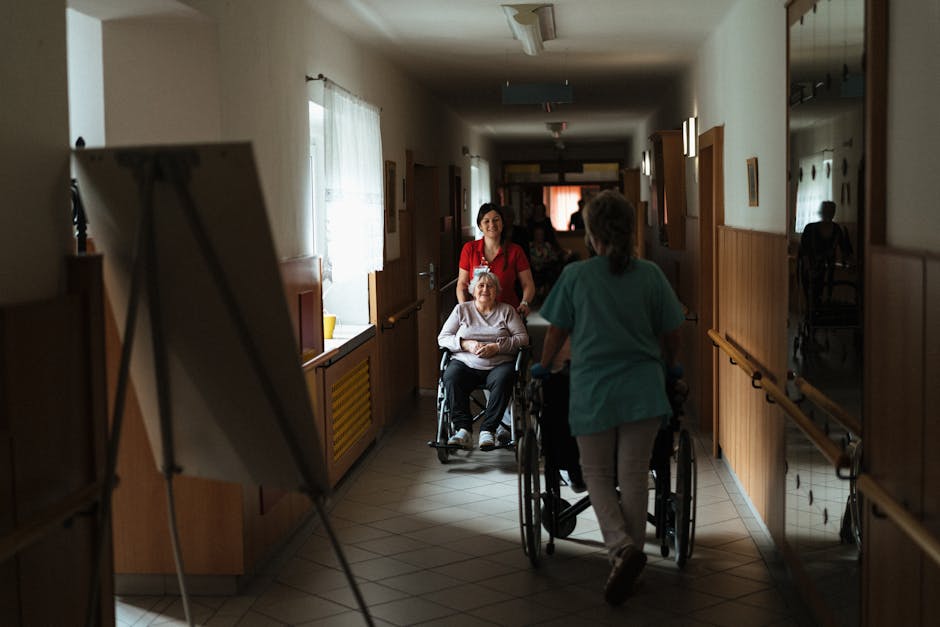
A person who uses a cane or other mobility technique should not be pulled or steered without permission. Assistance works best when the resident controls the pace and receives advance notice of steps, doorways, narrow spaces, and changes in flooring.
What technology and labeling can help?
Simple tools can support independence without replacing human assistance. Large-print labels, tactile markers, talking clocks, illuminated magnifiers, high-contrast calendars, and phones with enlarged controls may be useful.
Medication organization requires particular care. Labels should be easy to distinguish, and instructions should be available in a format the resident can use reliably. Staff should follow established medication procedures rather than expecting a resident to identify an unlabeled container by shape or color alone.
Voice-controlled devices may help with reminders, calls, music, and reading information aloud. They should be set up with privacy, emergency needs, and the resident’s comfort in mind. Technology is most useful when the resident understands how to operate it and there is a backup plan if it fails.
How can residents prepare for emergencies?
Emergency plans should account for reduced vision, limited lighting, smoke, noise, and unfamiliar routes. A resident should know how to request help and how staff will provide guidance during a power outage, fire alarm, severe storm, or winter weather event.
The plan may include:
- A clearly explained evacuation route
- Practice using stairs or alternate exits when appropriate
- Identification of accessible meeting locations
- A backup for phones, hearing devices, magnifiers, and other essential equipment
- Staff instructions for guiding the resident without rushing or pulling
- Extra attention to icy entrances, snow-covered walkways, and low visibility during winter conditions
Emergency drills should be explained in advance when possible. Practicing calmly can reduce anxiety and reveal problems that are not obvious during normal routines.
What should families and residents ask during a move or care review?
Families and residents can ask how the living environment supports people with low vision and how individualized changes are documented. Useful questions include:
- Can room lighting be adjusted?
- How are furniture changes communicated?
- Are large-print or accessible activity materials available?
- How are meals identified and placed?
- What assistance is available for unfamiliar routes?
- How are emergency procedures adapted?
- Who should be told if the resident’s vision or mobility changes?
Vision needs may change after illness, surgery, medication changes, or a new eye condition. Adaptations should be reviewed whenever the resident begins avoiding activities, bumping into objects, misidentifying items, or needing more help than before.
The safest assisted living environment is not necessarily the most highly modified one. It is the environment where hazards are visible or clearly identified, routines are predictable, and support is offered in a way that protects both safety and personal choice.
