
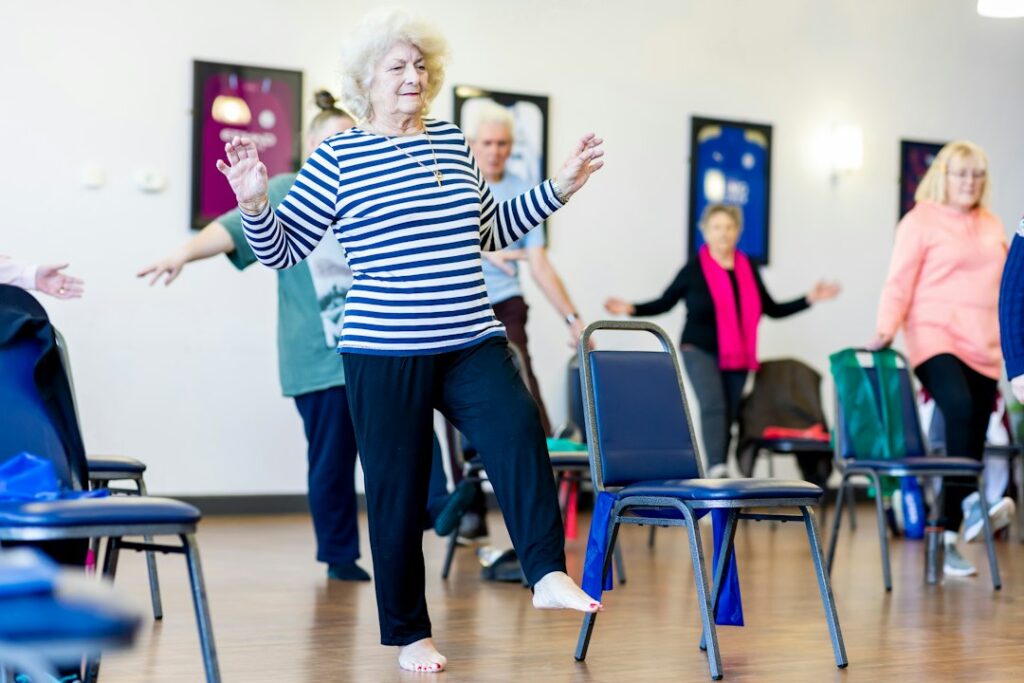
Fitness programs in assisted living are designed to help older adults maintain strength, balance, flexibility, endurance, and confidence in daily activities. The most useful programs are not built around athletic performance. They focus on safe movement that supports walking, standing, dressing, bathing, reaching, and participating in community life.
What types of exercise are offered in assisted living?
Most assisted living fitness programs combine several forms of movement rather than relying on one class or activity. A typical weekly schedule may include:
- Seated exercises for residents who have limited balance, weakness, or fatigue
- Chair-supported standing exercises
- Gentle stretching for the shoulders, hips, legs, and back
- Light strength training using resistance bands, soft weights, or body weight
- Balance activities that practice controlled standing and weight shifting
- Walking groups indoors or outdoors when conditions are suitable
- Breathing, posture, and range-of-motion exercises
- Low-impact activities such as dancing, balloon volleyball, or movement games
Programs may be offered in a common room, activity area, hallway, or outdoor space. Exercises can often be adapted for residents who use walkers, canes, wheelchairs, or other mobility equipment.
The goal is participation at an appropriate level. A resident may complete an entire routine while seated, while another may stand for part of the session and walk afterward.
How does exercise help older adults in assisted living?
Regular movement can support several areas of health and daily function. Strength exercises may make it easier to rise from a chair, transfer in and out of bed, or carry light personal items. Balance practice can improve confidence during walking, although it does not eliminate fall risk.
Flexibility and range-of-motion activities may help residents move their joints more comfortably. Gentle aerobic activity, including walking or repeated seated movements, can support stamina for meals, social activities, and personal care.
Exercise may also provide benefits beyond physical function. Group activities can reduce isolation, create a predictable routine, and give residents a shared goal. Some older adults are more willing to move when exercise feels social rather than clinical.
Fitness is not a substitute for medical care. It is one part of a broader plan that may also include medication management, nutrition, sleep, therapy, and help with activities of daily living.
Is exercise safe for residents with health conditions?
Exercise can be safe for many residents when the activity is matched to their abilities and current health status. Residents with heart disease, lung conditions, diabetes, arthritis, osteoporosis, neurological disorders, recent surgery, or a history of falls may need specific adjustments.
A safe program should allow residents to:
- Begin with a gradual warm-up
- Move at a comfortable pace
- Rest as needed
- Use a stable chair, countertop, or other approved support
- Avoid breath-holding during strength exercises
- Stop if unusual pain, dizziness, severe shortness of breath, chest pressure, confusion, or sudden weakness occurs
New or worsening symptoms should be reported promptly. Exercise instructors and care staff should also know about recent falls, medication changes, injuries, hospital stays, and changes in walking ability.
Residents should not feel pressured to keep up with a group. A slower pace, fewer repetitions, or a seated version may be the safest and most effective choice.
How can assisted living fitness programs reduce fall risk?
Fall prevention is often a major reason that balance and strength activities are included in senior fitness programs. Exercises may practice standing from a chair, shifting weight from one foot to the other, taking controlled steps, turning carefully, or reaching without losing stability.
However, exercise alone does not prevent every fall. The surrounding environment matters as well. Good fall-prevention practices may include clear walking paths, adequate lighting, properly fitted mobility devices, secure footwear, and prompt attention to spills or uneven surfaces.
Seasonal conditions also deserve consideration in Hermitage, PA. Snow, ice, wet entryways, and reduced daylight can affect outdoor walking and transportation to activities during colder months. Indoor walking routes and seated movement sessions can help maintain activity when outdoor conditions are unsafe.
Residents and families may also ask whether a new exercise program changes the need for supervision. It does not. A person who requires assistance with transfers or walking should continue using the level of support recommended in the care plan.
What should a resident wear and bring to an exercise session?
Comfortable clothing that allows movement is usually appropriate. Shoes should fit securely and have soles that provide traction. Loose slippers, backless footwear, or shoes that slide off may increase the chance of losing balance.
Helpful items may include:
- A properly adjusted cane or walker, if normally used
- Eyeglasses or hearing devices
- A water bottle if permitted
- A list of symptoms or activity concerns to discuss with care staff
- A small towel for comfort during movement
Jewelry, scarves, or clothing that can catch on equipment may be better removed before exercise. Residents should avoid exercising while overly tired, dehydrated, feverish, or unwell unless a qualified member of the care team has provided specific guidance.
Can residents with memory loss participate?

Many residents with memory loss can participate in adapted fitness activities. Simple, familiar movements may work better than complicated routines. Demonstrations, repetition, music, and short instructions can make participation easier.
The activity should emphasize enjoyment and comfort rather than perfect performance. A resident may walk with a group, pass a soft ball, complete hand and arm movements, or follow a brief seated routine.
Staff should watch for signs of frustration, fear, overstimulation, or fatigue. A quiet setting, smaller group, or shorter session may be more suitable than a busy class. Familiar routines can also help residents recognize what is expected.
How often should older adults exercise?
The appropriate schedule depends on health, mobility, endurance, and personal goals. Many older adults benefit from some form of movement most days, but daily activity does not need to mean a formal class.
A practical routine may include brief movement several times throughout the day:
- Walking to meals when safe
- Performing seated leg and arm movements
- Practicing standing from a chair under supervision
- Stretching after a period of sitting
- Participating in a scheduled group session
- Taking a short indoor walk during poor weather
Short sessions may be more manageable than a single long workout. Rest days or lighter activity may be appropriate after illness, poor sleep, pain, or increased fatigue.
Consistency matters more than intensity. A resident who completes ten minutes of safe movement regularly may gain more practical benefit than someone who attempts an exhausting session only occasionally.
What questions should families ask about a fitness program?
Families can better understand whether a program is appropriate by asking how activities are adapted for different abilities. Useful questions include:
- Are seated and standing versions offered?
- How are walkers, wheelchairs, and canes accommodated?
- What happens if a resident becomes tired or dizzy?
- Are activities adjusted after a fall, illness, or hospitalization?
- How are outdoor sessions handled during snow, ice, heat, or rain?
- Is participation voluntary?
- How are changes in strength, balance, or endurance communicated to the care team?
- Can a resident’s personal goals be included in the activity plan?
The best program is not necessarily the most vigorous or highly structured. It is one that residents can join safely, understand easily, and continue as their abilities change.
What if a resident dislikes exercise classes?
Fitness does not have to look like a traditional workout. Some residents may prefer walking to a destination, gardening activities, light dancing, stretching with music, or helping with a simple recreation task.
A person who refuses a formal class may still participate in movement during daily routines. Standing during a favorite song, taking an extra hallway walk, practicing hand exercises while seated, or joining a recreational game can provide useful activity without the label of exercise.
Respectful encouragement is usually more effective than pressure. The purpose is to support function, independence, comfort, and quality of life while recognizing that every resident has different interests and limitations.
